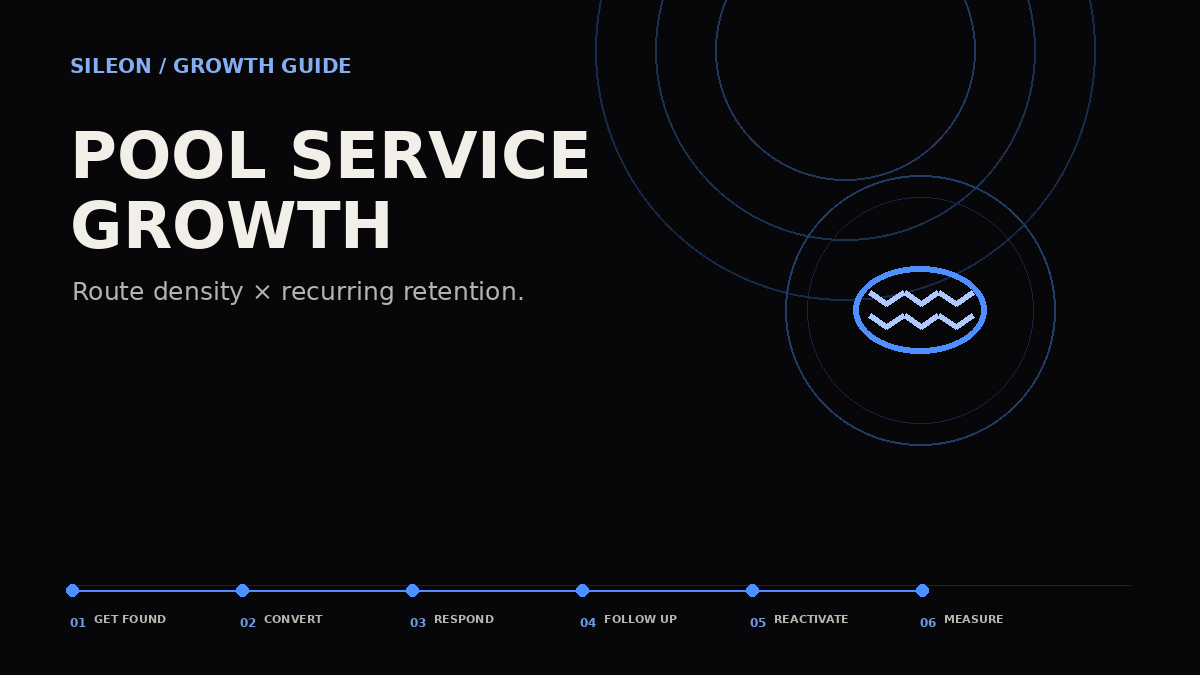
1. Get Found: Are you visible in the neighborhoods that improve the route?
For a recurring route business, geography is part of acquisition quality. Two new weekly customers may look identical in a lead report but have very different drive-time impact.
That means “more local traffic” should be interpreted through route economics rather than as an abstract SEO goal.
What to inspect
- Google Business Profile/local relevance
- service pages for real maintenance/opening/closing/repair offerings
- geographic targeting based on real service capability
- seasonal content published before demand peaks
Build density, not just radiusA broad service area can be less efficient than deeper penetration in a few neighborhoods. Use the company’s own route data to decide.
What improvement would actually mean
Improvement means qualified discovery grows in areas and service types that strengthen the business’s desired route.
2. Convert: Does the site make recurring and seasonal service easy to understand?
Pool owners may be searching for very different needs. A maintenance prospect should not have to infer whether the company also only does repairs, and a seasonal customer should understand how to request an opening or closing.
Clear service architecture improves fit before the business spends time on the call.
What to inspect
- clear service categories
- recurring-service expectations without hidden terms
- seasonal service timing/process
- verifiable reviews and mobile contact
Clarity reduces route noiseWhen services and service areas are vague, the business receives more inquiries it cannot or does not want to serve.
What improvement would actually mean
Improvement means a higher share of inquiries match the service model and route plan.
3. Respond: Are new pool inquiries acknowledged quickly during field routes?
Technicians may spend the day outside or driving between stops. New inquiries still need a clear owner so they do not sit until evening.
Response can collect basic service and location context before someone spends time building a quote or schedule.
What to inspect
- missed-call recovery
- service-area/route qualification
- service type and timing
- clear owner for new-customer onboarding
Fast does not mean instant acceptanceAcknowledge the inquiry and check route fit before promising a recurring slot.
What improvement would actually mean
Improvement means legitimate new-customer inquiries enter a visible qualification/onboarding process.
4. Follow Up: Does first service become a stable customer relationship where appropriate?
For recurring maintenance, acquisition value depends on retention and service experience after the first yes. A leaky onboarding process can make marketing look ineffective when the real problem is relationship setup.
For seasonal or one-time work, follow-up should match that model rather than forcing a subscription.
What to inspect
- new-customer onboarding
- service cadence/expectations
- issue escalation path
- renewal/cancellation status where relevant
Retention starts at onboardingThe customer should know what they bought, when service happens and how to communicate concerns.
What improvement would actually mean
Improvement means more appropriate customers remain active and fewer leave for preventable expectation reasons.
5. Reactivate: Are seasonal and lapsed customers being contacted at useful moments?
Pool service has obvious calendar moments, which makes reactivation useful when it is tied to a real past relationship. A prior closing customer may reasonably need an opening; a lapsed maintenance customer may or may not be a good fit to contact.
The key is context and permission, not generic bulk messaging.
What to inspect
- seasonal service records
- recurring customers who paused/cancelled and why
- permission/contact preferences
- timing tied to real seasonal need
Use season as context, not pressureA timely reminder about a real past service is different from manufacturing scarcity or risk.
What improvement would actually mean
Improvement means appropriate seasonal and former customers return when the service genuinely fits.
6. Measure: Can you measure customer sources by route and retention?
A channel can create many new customers but poor route density. Another may create fewer customers clustered near existing stops. The marketing report should preserve that operating difference.
For recurring service, retention should eventually be part of source evaluation using the company’s own data.
What to inspect
- source at inquiry
- route zone/neighborhood
- service category
- active/seasonal/lapsed status
Measure route fit, not just CACLead cost alone does not describe whether the resulting customer strengthens the recurring operation.
What improvement would actually mean
Improvement means acquisition channels can be judged by route fit and retained customer outcomes.