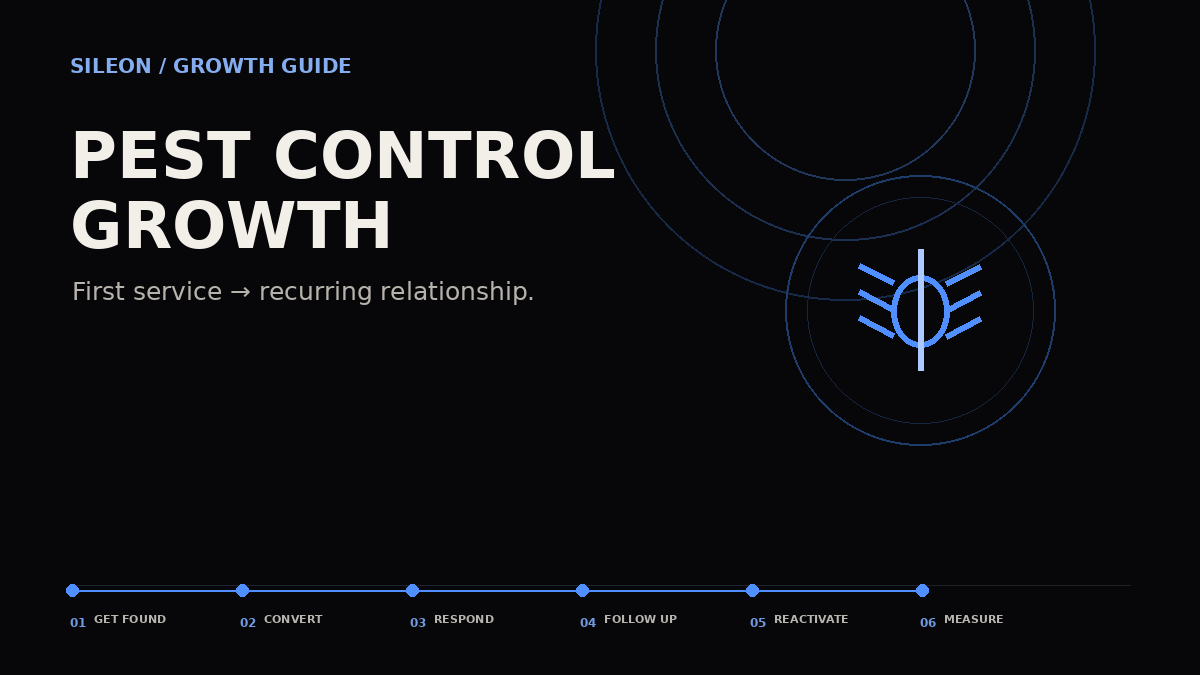
1. Get Found: Can customers find you for the pest problem and service area you actually handle?
People frequently search by the pest problem they see, not by a technical treatment name. The site should bridge that language while avoiding diagnosis or safety claims it cannot support remotely.
Local relevance is especially important for a service that depends on a technician actually reaching the property.
What to inspect
- service pages for real pest categories/solutions
- Google Business Profile relevance, photos and reviews
- service-area accuracy
- seasonal pages only where they add real value
Answer the problem without overstating itExplain what the company handles and what the next step is. Avoid fear-based claims about health or structural risk that require professional inspection.
What improvement would actually mean
Improvement means more qualified local discovery for services the company truly provides.
2. Convert: Does the site explain the first service and ongoing options clearly?
A pest-control page can convert poorly when it relies on anxiety but does not explain the service. Customers need to know what the company handles, what the first step is and whether ongoing service is part of the model.
Clear expectations can improve fit and reduce frustration even before the technician arrives.
What to inspect
- clear service categories
- realistic treatment/process explanation without guarantees
- current, verifiable reviews/trust signals
- mobile call/booking path and plan transparency
Do not promise eradication outcomes you cannot controlThe website can explain process and scope; it should not guarantee a biological outcome or imply every infestation behaves the same.
What improvement would actually mean
Improvement means more qualified customers choose an appropriate first step with fewer expectation mismatches.
3. Respond: Are urgent inquiries answered before the customer calls the next company?
Pest problems feel urgent to the customer even when they are not emergencies. Slow response can push the customer to keep calling competitors.
A response system should confirm receipt and scheduling expectations without pretending a technician has diagnosed the problem from a form.
What to inspect
- call and form ownership
- missed-call recovery
- after-hours response expectations
- service-area and pest-type qualification
Fast communication, careful claimsSpeed should improve the handoff to a real service decision—not become a reason to overpromise what the treatment will accomplish.
What improvement would actually mean
Improvement means legitimate inquiries reach a booked or clearly qualified next step more consistently.
4. Follow Up: Is the path from initial service to ongoing relationship intentional?
For companies with recurring plans, the acquisition journey does not end at the first treatment. The customer has to understand the ongoing value and remain satisfied enough to continue.
For one-time models, follow-up may focus on completion and future contact rather than a subscription. The system should match the actual offer.
What to inspect
- post-service follow-up
- clear recurring-plan offer/renewal terms
- customer questions or unresolved issues routed correctly
- ownership of cancellations/renewals
Retention is not a hidden upsellIf recurring service is part of the model, explain it openly and let the customer understand the commitment.
What improvement would actually mean
Improvement means more appropriate first-service customers become durable relationships when the offer fits.
5. Reactivate: Can lapsed or seasonal customers be contacted appropriately?
Pest demand can be seasonal and recurring. A past customer may have a legitimate reason to return, but that does not justify blasting everyone with alarming messages about infestations.
Reactivation should be grounded in actual customer history, timing and permission.
What to inspect
- renewal reminders tied to real plans
- lapsed-customer status and reason
- seasonal service history
- do-not-contact/consent handling
Do not manufacture fear to reactivateA useful reminder can reference a real service relationship. It should not imply a new pest problem the company has not observed.
What improvement would actually mean
Improvement means relevant lapsed customers re-engage without increasing complaints or distrust.
6. Measure: Do you know which sources create retained customers, not just first calls?
One channel may create cheap one-time calls while another produces customers who stay on an appropriate recurring plan. That difference can matter to acquisition economics.
The business should use its own retention and gross-profit data rather than outside averages.
What to inspect
- source at first inquiry
- service/pest category
- first-service booking
- recurring/renewal status where relevant
Measure the relationship you sellIf recurring service is important, source reporting should eventually connect to recurring status—not stop at the first form submission.
What improvement would actually mean
Improvement means acquisition channels can be compared by real customer outcomes and retention path.